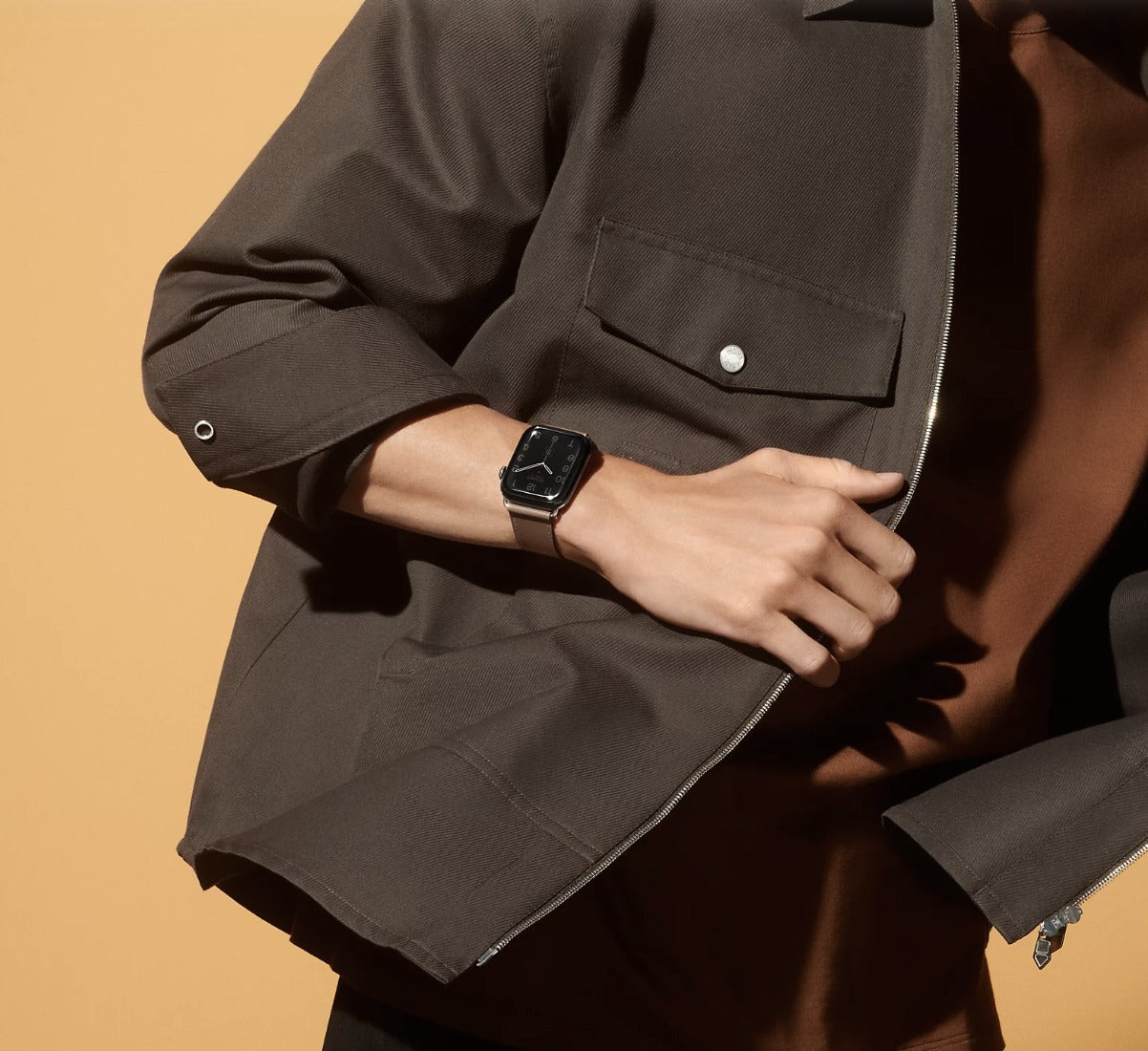
Why I Bought an Apple Watch Ultra to Use My Phone Less
I didn't buy the Apple Watch Ultra for fitness. I didn't buy it for adventure. I didn't buy it because I wanted a rugged watch to take up a mountain.
I bought it because I wanted to use my phone less.
That's it. That's the whole reason. And honestly, if you'd told me three years ago that a piece of technology would be the thing that helped me break up with my phone, I'd have laughed. But here we are. My screen time used to sit north of six hours a day. Now it's closer to ninety minutes. And the single biggest thing that made that possible was an Apple Watch Ultra on my wrist.
If you've been thinking about the Ultra and you're struggling to justify the price tag against the regular Apple Watch—or if you're stuck in the same phone-addiction cycle I was in and you don't know how to get out—this is the piece I wish someone had written when I was doing the research.
The Cookie Jar Problem
Here's an analogy I use a lot.
If someone fills a cookie jar with your favourite biscuits and puts it on the bench where you walk past it fifty times a day, you are going to eat a lot of biscuits. It doesn't matter how much willpower you have. It doesn't matter how good your intentions are. Proximity and availability win. Every single time.
Your phone is a cookie jar. It's a cookie jar with Instagram in it. And YouTube. And TikTok. And every email you haven't replied to, every text you haven't seen, every notification from every app you've ever downloaded. It sits in your pocket, or on your desk, or on the arm of the couch—and every time you're slightly bored, slightly uncomfortable, slightly restless, you reach for it.
I used to tell myself I had the problem under control. I didn't. Nobody I know does. The apps are built by some of the smartest engineers in the world, and their whole job is to make the cookie jar as appetising as possible.
The only thing that's ever worked for me is putting the cookie jar somewhere else. Not in my pocket. Not in the same room. Out of arm's reach entirely.
The problem was, I still needed to be reachable. I still needed to pay for things. I still needed to check the time, see my calendar, know when the next thing was starting. Every time I tried to leave my phone in another room, I'd end up going to get it for some perfectly good reason—and I'd come back forty minutes later having watched reels about someone renovating a kitchen in Denmark.
The Ultra is what finally broke that loop for me.
What Changed
The thing that clicked for me was realising that almost everything I actually need my phone for in a given day, the watch can do.
Calls come through on the watch. Messages come through on the watch. Apple Pay works on the watch. Alarms, timers, calendar reminders, weather, music controls, podcasts—all on the watch. If someone needs me, they can reach me. If I need to buy a coffee, I can buy a coffee. If I want to know what time my next meeting is, it's right there.
What the watch doesn't have is Instagram. It doesn't have TikTok. It doesn't have YouTube. It doesn't have a browser I can get lost in, or a news app I can doomscroll through, or a feed of any kind. The stuff I actually need is on my wrist. The stuff that wastes my life isn't.
So now I just leave the phone. In another room. In my bag. In the car. Wherever. And for the first time in about a decade, my hands aren't constantly hunting for a glowing rectangle.
The Gym Thing
This is one that surprised me.
I used to go to the gym with my phone. Everyone does. You sit between sets and you scroll. You check messages. You watch a clip. You see what someone posted. Then you do your next set, and you scroll some more.
I had a moment, probably a year ago now, where I looked around the gym and every single person sitting on a bench had their head bent over a phone. Not a few people. Every person. Including me.
I started leaving my phone in the locker. But I needed something to do between sets—sitting there staring at a wall isn't realistic for a ninety-minute session.
Now I bring a book. An actual, physical book. I read a few pages between sets. My workouts take the same amount of time, but instead of coming out the other end with nothing to show for the downtime, I've read a chapter or two. Across a week, that's real progress on a real book.
And I'm still reachable the whole time, because my watch is on my wrist. If someone needs me, I'll know. If there's an emergency, I'll get the call. But the cookie jar is in the locker, and it stays there.
The Ultra specifically matters for this because of the battery. If I'm charging my regular Apple Watch every night, I have to take it off at home, which means I'm on the phone for my alarm in the morning, which means I pick up the phone first thing, which means the whole day starts with a scroll. The Ultra's battery means I charge it in a 30-45 minute window during the day, and the watch stays on my wrist the rest of the time—including overnight.
That continuity matters more than it sounds like it should.
The Woolies Run
Here's a small one that I didn't expect to care about.
You know when you need to duck out for something quick—milk, a parcel, a coffee—and you have to do the pocket check? Phone. Wallet. Keys. Every time. Three separate things, all of which you need, none of which fit comfortably in the same pocket.
Now I just grab my car keys. That's it. My watch has Apple Pay for whatever I need to buy. It has the messages and calls coming through if anyone needs me. It has the time. It has my podcast controls if I want something in the car.
The first time I walked out of the house to do a Woolies run with nothing in my pockets, it felt genuinely weird. Like I'd forgotten something. I kept patting myself down, expecting to feel the weight of a phone that wasn't there.
Now it's just how I do things. Anything quick, local, errand-y—it's just the car key and the watch. That lightness is a small thing, but it's the kind of small thing that makes you realise how heavy the default setup was.
From Six Hours to Ninety Minutes
I want to be specific about the screen time thing because I think people underestimate it.
Before the Ultra, I was looking at six to seven hours of screen time most days. I checked because I'd started to feel like something was off, and I wanted to know how bad it actually was. Seeing the number was horrifying. That's a quarter of the day. More than I was spending on anything except sleep.
Now I sit somewhere around an hour and a half on an average day. Sometimes less. And that time is mostly actual use—answering messages properly, checking the things I need to check, writing when I need to write. Not phantom scrolling.
I'm not going to pretend the Ultra did that on its own. I also had to want it. I had to make some decisions about which apps I kept on my phone. I had to accept that there would be a period of mild discomfort where my hand would reach for something that wasn't there anymore.
But the Ultra made the whole thing possible, because it solved the one problem that had sunk every previous attempt I'd made: the part where I genuinely need my phone for things. Without the watch, every attempt at digital minimalism ran into the same wall—you can't actually go without the phone, because the phone does too much. The watch did enough of the necessary stuff that the phone could be kept at arm's length.
If you've tried to cut down and failed, I suspect this is why. The cookie jar is too useful. You keep having to go back to it. What you need isn't more willpower—it's a second, smaller jar with just the essentials in it, so the big one can stay on a high shelf.
Why the Ultra Specifically, Not the Regular Apple Watch
Fair question. You can do most of what I've described with a regular Apple Watch too. So why spend the extra money?
Honestly, for me it came down to the battery.
The regular Apple Watch lasts a day. That means you charge it every night. Which means it's off your wrist for a chunk of time every 24 hours. Which means—for me, at least—you end up on your phone during that chunk, because that's how alarms and morning check-ins work.
The Ultra lasts 36 hours in normal use, and up to 60 in low power. So I charge it in the morning while I'm making coffee, or during a stretch of desk work where I'm not moving around. It's on my wrist the rest of the time. Including every night. Including overnight. Including the first thing I see when I wake up.
That continuous wearing is the difference. It's the thing that removes the "well, I had to pick up the phone because my watch was charging" excuse. With the Ultra, the excuse doesn't exist. The watch is always there.
Is the regular Apple Watch a valid alternative? Sure, if you're fine with charging it overnight and using your phone for the edges of your day. But if you're actually trying to do the digital minimalism thing properly, the Ultra is the one that makes it work without compromises.
Who This Won't Resonate With
I should say: if you're not trying to reduce your phone use, none of this will mean much. If you love your phone, use it a lot, and feel fine about that—great. The Ultra might still be worth it for other reasons, but this particular angle isn't for you.
This piece is for the people who've looked at their screen time and felt the same sinking feeling I felt. The people who've tried deleting apps and had them reinstalled by the end of the week. The people who want to read more, think more, be present more, and have found that the phone is the single biggest thing standing in their way.
If that's you—seriously, the Ultra is one of the best purchases I've ever made. Not because of any feature on the spec sheet, but because of what it lets you stop doing.
The Band Thing
One last thing, and then I'll let you go.
The watch I'm describing—the one that comes off your wrist approximately never—is a watch you need the right band for. Because you're wearing it more than any watch you've ever owned. You're wearing it to the gym. You're wearing it to dinner. You're wearing it to sleep. You're wearing it on the school run and in meetings and at the pub.
No single band handles all of that well. The stock band you get with the Ultra is fine, but it's one band for one vibe. Once you start actually wearing the watch the way the Ultra lets you, having a small rotation genuinely improves the experience.
That's why I started Smart Straps in the first place. I wanted a soft silicone for sleep. A premium leather for nicer occasions. Something sporty for training. And I didn't want to spend Apple prices for each one.
If you're leaning toward the Ultra and want to get more out of it from day one, you can browse our full range of Apple Watch Ultra bands — built for the way you'll actually be wearing it.
The Real Reason to Buy an Ultra
The Ultra isn't a fitness watch. It isn't an adventure watch. Those are marketing angles that sell well to a certain kind of buyer, and Apple's clearly happy to lean on them.
But if you ask me, the Ultra's real superpower is much quieter. It's a digital minimalism tool. It's the device that lets you put your phone down for good. It's the cookie jar you can actually live with, while the big one stays on the high shelf where it belongs.
Three years ago, I was on my phone for six hours a day. Today, I read books between gym sets. I run errands with nothing but a car key. I wake up without scrolling. I'm more present at dinner, in conversations, in the actual moments of my actual life.
None of that was willpower. It was the watch.
If that's the life you're trying to build, the Ultra is the best tool I've found for building it.